Delhi Capital: An Informative Guide about Delhi city
DelhiCapital HomeAbout DelhiCapitalContact DelhiCapital
Facts and Figures
Delhi Facts and Figures, History, Culture and Lifestyle
Delhi History
People and Population
Monuments in Delhi
Insight to Delhi
Tour to Delhi, Locations, Market and shopping places
Delhi Location
Connaught Place
Delhi and NCR
Dining and Cuisines
Delhi Food Guide, Delhi cuisine
Eating Out Delhi
Bars and Pubs
Restaurant and Cafes
Travel and Tourism
Delhi Travel, Monumments in Delhi
Getting to Delhi
Travel Tips
Hotels and Accomodations
Delhi Metro Train Delhi History Delhi Metro City Travel to Delhi, Places to Visit in Delhi
 
Know your City
About Delhi
Delhi History
Delhi Lifestyle
Delhi Climate
Delhi Fast Facts
More on Delhi »
 
Things to Do
Education in Delhi
Eating out in Delhi
Shopping in Delhi
Events in Delhi
Entertainment in Delhi
Sports and Outdoors
 
Business & Economy
Business Hub
Economy and Finance
BPO's and Call-centers
Call-centers/BPO Jobs in Delhi
 
Infrastructure in Delhi
Facilities in Delhi
Delhi Metro Rail
Airports
Hotels
Transportation
Hospitals
 
Monuments in Delhi
Red Fort (Lal Qila)
Humayun Tomb
Akshardham Temple
Lotus Temple
More Monuments in Delhi »
 
Delhi Locations
East Delhi
West Delhi
North Delhi
South Delhi
More »


COMMONWEALTH GAMES: Uncommon Wealth
 
Commonwealth Games Home
COMMONWEALTH GAMES 2010 News Archives»

COMMONWEALTH GAMES: Uncommon Wealth
November 7, 2007

With little more than a thousand days left for Delhi to play host to the Commonwealth Games, here's an interesting article in Hindustan Times assessing the progress.

CPWD is at work and so are NDMC and MCD. A string of departments, a series of plans and multitude of personnel, have all spruced up their act and have taken upon themselves the task of giving a new face to the capital as the Commonwealth Games deadline looms large.

"The NCT of Delhi sees CWG 2010 as an opportunity to upgrade the city's infrastructure to make it a really world class city,' says Dr. A.K. Walia, Minister of State for Finance Planning, PWD and Urban Development pointing out that the government being the host is concerned with city beautification, better connectivity, traffic management, parking, power and water supply, security and health services.

Says Rakesh Mehta, Delhi Principal Secretary in charge of the Commonwealth Games Projects, Delhi Government is involved with supporting infrastructure apart from sprucing up two games stadia - Thyagaraja Sports Complex that will be used as a multi-purpose indoor stadium for net ball and athletic training track and Talkatora Stadium that will be used as a wrestling venue for women.

As much as Rs. 780 crores are being pumped in by the Central Government and Rs. 350 crore by the Planning Commission. Thus, almost Rs.1,000 crores are being spent for the entire management of the games, he points out. "Work has already started. Delay is largely due to reservations by Delhi Urban Arts Commission's over the construction of the NH24 tunnel Road to east Delhi connecting Jawaharlal Nehru Stadium," he says.

There is a proposal for a road project linking the Games Village to Jawaharlal Nehru Stadium and passing near Humayun's tomb. The plan is to have a four-lane 2.2 km underground stretch from Ring Road to Lodhi Road in order to reduce traveling time by six minutes when the participants are taken from the village to the stadium for the opening and closing ceremonies.

As for roads, Delhi Government is planning to construct road under bridges and over bridges along railway lines to have a smooth flow of traffic even when trains pass by. Flyovers and bridges have been planned for providing connectivity to the games village, venues, hospitals and for intra city connectivity.

Major widening projects are being undertaken, including those of national highways. There are plans make both the inner and outer Ring roads signal free. Major cloverleaf flyovers and bridges have been planned for providing connectivity to the games village, venues, hospitals and for intra city connectivity.

Major widening projects are being undertaken, including those of national highways. There are plans to make both the inner and outer Ring roads signal free. Major cloverleaf flyovers are also being planned, points out Mehta.

Nine corridors have been identified for High Capacity Bus Systems out of which some are under construction is the one from Ambedkar Nagar to Red Fort. Six will start by next year. The thrust is going to be on public transport and the use of intelligence system, points out Mehta.

For transport upgradation, 1000 hi-tech buses are being purchased, 200 exclusively for the games personnel and 800 for others. The emphasis will be on public transport.

NDMC

NDMC has undertaken the project of upgrading the Shivaji Stadium and Talkatora stadium. As for Shivaji stadium that will be used as a training ground for hockey, the designs have been cleared by DUAC and the tendering process will begin soon, says a senior NDMC official, adding it should be ready by September 2009. Talkatora stadium would be used as a competitive venue for the boxing event. The statutory approvals have been obtained and the concept plan and preliminary estimated have been prepared. "We are making detailed estimates and tender documents. Work is likely to commence this year and will be completed by 2009," he says.

CPWD

Another beneficiary of the infrastructure upgradation drive put in place for the Commonwealth Games, are five stadia across the city that have been selected for hosting various events during the Games. The Central Public works Department (CPWD) has already finalized upgradation plans for these stadia, as a part of which it has decided to beautify their environs as well.

The Sports authority of India has selected CPWD as the principal executing agency and a consultant for renovation, upgradation and new constructions for some of its venues for the Commonwealth Games 2010. These are Jawaharlal Nehru Stadium, Indira Gandhi Indoor Stadium, Major Dhyan Chand National Stadium, Dr. Shyama Prasad Mukherjee Stadium (Talkatora Swimming Pool) and Dr. Karni Singh Shooting Range.

The facelift exercise for Delhi's five main stadiums will cost Rs. 1200 crore, says A Chakraborty, DG CPWD. As part of the plan a new indoor facility for weightlifting will come up near the Jawaharlal Nehru Stadium. "The indoor facility of the stadium is being designed in a manner that it can be used as a concert hall even when the games are over. The idea is to have a self sustainable structure so that it can be put to multiple uses," he says, adding the place will have parking facilities and a 2,500 seater facility, surpassing Siri Fort which has a capacity of 1,500.

This stadium will get a state-of-the-art tensil membrane roof supported by cables. The edge of the roof will have an uniform inner lighting system to cater to the high density television transmission, new warm up facilities, a new administrative block, a World Anti Doping Agency (WADA) laboratory and a hostel-cum-media centre. Ramps will also be put up at the entrance and exit to make the venues barrier free. The total cost for this project is Rs. 455 crore.

For the JNS complex, the concept plans and building drawings have been submitted to DUAC as well as MCD. DUAC has approved the concept and the new road design. The traffic dispersal scheme and landscaping scheme are under scrutiny," he says.

"At Talkatora Stadium we are only upgrading and repairing the pools as per international standards, capacity wise it remains the same. It will be an air-conditioned hall with a capacity of 10,000 - 6,000 is the existing capacity. 4000 will be added on a temporary basis. Work is slated to start is August and the JNS is September. Total cost for the SPM project is Rs. 145 crore," he says, adding the concept and design of the SPM Swimming complex have also been cleared by DUAC.

For the Major Dhyan Chand National Stadium, the seating gallery will be designed; there will be two competition synthetic turfs with floodlights for high-density television transmission and a warm up pitch and a hostel-cum-media centre for 150 persons. Total cost for this project is Rs.113 crores.

All these works are scheduled to be constructed by 2009. The physical execution of the jobs will be done through joint ventures or consortium of Indian contractors and foreign expert contractors and the Indian contractor will be the lead contractor. This will ensure transfer of technology and capacity building for the construction industry, he says.

The existing roof of the Indira Gandhi Sports Complex will be replaced by a state-of-the-art roofing, acoustics and sports lighting will be improved, a new warm up hall will be added and so will a new multipurpose hall with a seating capacity for 5,000 people. A new velodrome with a 250 metre timber track will also be constructed at the cost of Rs. 100 crores. If the sports not found to be popular after the games, the area will be used for business activities and for holding seminars.

The wrestling hall will have a capacity of 5,000 seats, of which 1,000 will be permanent. The hall could be commercially exploited later to generate sufficient revenue for running the complex. The cost for this project is Rs.160 crores.

A couple of issues have been kep in mind while redesigning these stadiums, points out Chakrabarti. The existing venues will be planned in such a manner that these facilities becomes revenue earners, at least to meet operational costs during the post games phase termed as the legacy phase. Sustainability planning is an important part of the planning process. "We are planning to design the space in such a way that it can be used for a different purposes later, including conferences and corporate seminars. The corporate box concept was developed during the Melbourne Games in which the space was sold for meetings and conferences to corporates," he says.

Another aspect that has been kept in mind is to make them environment friendly. They would all include the new efficiency code, water harvesting and focus on sustainable development with an eye for minimum carbon emission.

The National Stadium is a 1930 building so the façade cannot be changed much, he says, point out that "We plan adding night playing facilities, additional competition turf and two hostel blocks that can later be used as a media centre."

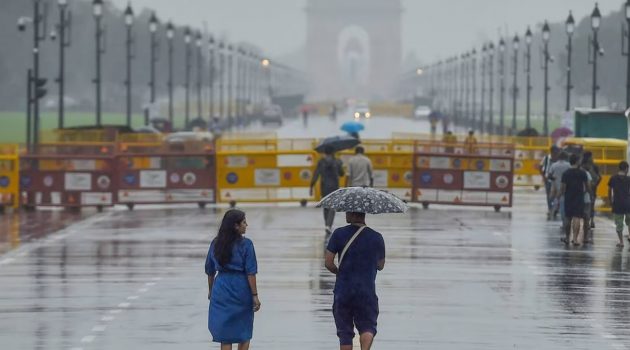
There are also plans to redevelop the central vista that is the area around Rajpath from India Gate to the Rashtrapati Bhavan. The plan has been approved by the DUAC. It aims at streamlining plantation of trees and landscape in the heritage zone. This is part of CPWD's ambitious plan after it recently gained control of the heritage zone from NDMC.

The plan emphasizes on the beautification of Lutyens Delhi and upgradation of its infrastructure and civic utilities before eth games. The redevelopment plan also lays emphasis on uniformity of signages and furniture along the Central Vista.

There would also be a provision for depressed parking bays to cater to the parking of cars and two wheelers along the central vista buildings.

Commonwealth Village

DDA has been assigned the following projects for the games. The games village that has for a long time been embroiled in one controversy after another, and competition venues for badminton and squash at Siri For Sports Complex and for able tennis and archery at the Yamuna Sports Complex and provision for training venues.

The projected cost on development of the games village, competition venues for badminton, squash and table tennis and training venues for swimming athletics, fitness centre at the Games Village, badminton, squash, swimming and lawn bowls at Siri Fort Sports Complex and for table tennis, swimming and rhythmic gymnastics at the Yamuna Sports Complex is approximately Rs. 465 crores, says a senior DDA official, adding these are preliminary estimates which would be reviewed after venues designs are finalized.

As for the Commonwealth village project to be located near the Akshardham temple, which has been embroiled in controversy from the very beginning, work may now just begin. The DDA has accepted the financial bid of a consortium led by Dubai-based real estate firm Emaar-MGF to develop the residential facility for the games village. The facility will comprise about 400 rooms and will accommodate 8500 athletes and delegates expected to participate in the games. The financial bid was accepted at Rs. 321 crore as against the reserve price of Rs. 300 crore. Emaar MGF was the sold developer to submit the bid for the project. In February this year DDA had short listed 11 private developers to bid for constructing the facility under the public private partnership model . Only two had submitted their bids for the construction of the village as the other felt the guidelines laid out by the DDA were too stringent. However, DLF bid was found to be incomplete and therefore disqualified. After the games the developer have been given the option to sell the flats. Initially, DDA had to extend the deadline as none of the 11 private developers who had been short listed came forward to submit their bids. Developers blamed the stiff terms and conditions and various restrictions imposed by the DDA for the poor response. DDA was then forced to relax the norms under which it agreed to reduce its share in the residential facility from 50 percent to just one third. The developers will construct three residential blocks of which DDA will keep on block after the games.

Dwarka Project

The Dwarka mega project has been bagged by DLF. This is a Rs.3,000 crore project to set up India's largest convention centre of international standards at sector 24 Dwarka. The centre will comprise a conference hall spread over 72,000 square feet with a seating capacity of 12,000. A 32-month deadline has been set for completion of the project. It will not only meet immediate needs of the games but also position Delhi as a MICE (Meetings, Incentives, Conventions and Exhibitions) destination.

Lighting

Street lighting is being modernized as per international norms and work has already started, points out Mehta. There would be 12 m high poles, energy efficient lamps will be used, GSM systems for switch on and off through remote control and electricity will be metered. "We are giving the project to large private contractors who will maintain it for five years. Currently spending 110 crores for 200 km stretch. This is going to be done by PWD and another 225 kms are going to be done by the MCD," he says.

Better late than never seems to be the Delhi Government's motto. As for now, how well it can manage the big show, only the Games will tell.

Source: Hindustan Times

 
click here click here
 
About Us | Disclaimer | Contact Us
Copyright © 2007 www.Delhicapital.com, All Rights Reserved

Best Viewed in 1024 x 768 Resolution